
Here’s the counterintuitive thing about solar in cold climates: the panels themselves love the cold. Silicon cells are more efficient at lower temperatures, and a crisp -10°F day with clear skies will push a module above its STC nameplate rating. The problem isn’t the cold — it’s everything else. Short days, low sun angles, snow coverage, ice dams, and freeze-thaw cycles that stress laminates and junction boxes over a 25-year design life.
I’ve designed residential systems across the northern tier for years, and the panel choice for a roof in Duluth looks different than one in Phoenix. This is a look at the modules I’d actually specify today, with the tradeoffs that matter once you’re past the marketing brochures.
Quick Verdict: Top Cold Climate Modules
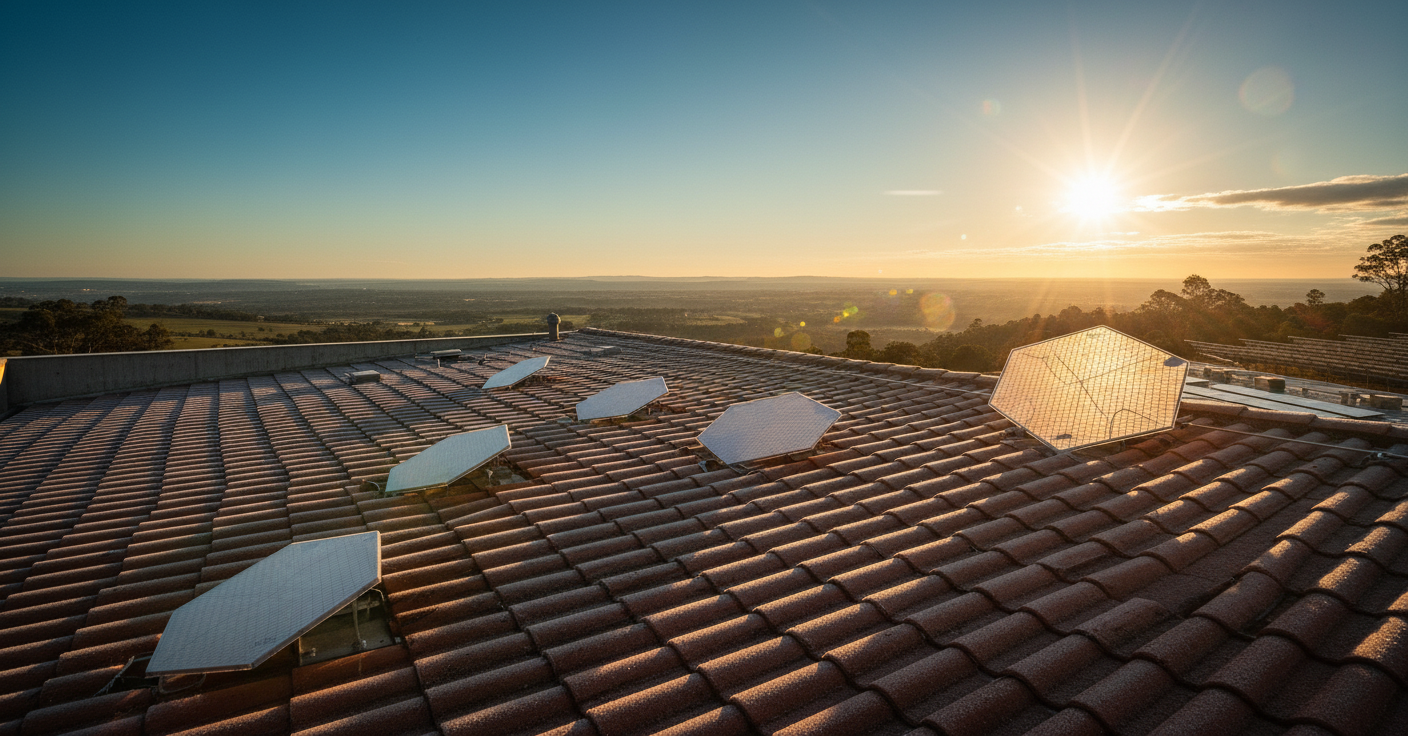
Top pick: SunPower (now Maxeon) Maxeon 6 — Best-in-class temperature coefficient and IBC cell architecture that genuinely handles thermal cycling. You’ll pay for it.
Runner-up: REC Alpha Pure-R — Heterojunction cells, strong low-light behavior, and the highest mechanical load rating on this list.
Weakest of the group: Jinko Tiger Neo — Good module on paper, but I’ve seen the most warranty hassle and QC variation here. Details below.
Why Temperature Coefficient Matters More Than You Think

Every module has a power temperature coefficient, usually expressed as a percentage per °C. For mainstream mono PERC, it’s around -0.34 to -0.40%/°C. Heterojunction (HJT) and IBC cells sit closer to -0.26 to -0.30%/°C. That coefficient cuts both ways: it’s a gift in February and a tax in July when cell temperatures can hit 65°C on a dark roof.
A second thing installers forget to tell customers: STC ratings (1000 W/m², 25°C cell temp, AM 1.5) are lab numbers. PTC ratings, used by the California Energy Commission, assume 20°C ambient, 1 m/s wind, and 1000 W/m² — closer to real rooftop conditions and typically 8-12% below STC. When you’re comparing modules, look at PTC if the manufacturer publishes it. Don’t compare STC on one panel to PTC on another.
Three things actually matter for cold-climate site design:
- Temperature coefficient of Pmax — the lower (more negative-ly small) the better
- Mechanical load rating — front-side snow load, measured in Pa
- Low-light and diffuse-light response — how the module behaves on overcast days and at steep incidence angles
Top 7 Cold Climate Modules
1. Maxeon 6 (Formerly SunPower)
Temperature coefficient: -0.29%/°C (manufacturer spec) Front load rating: 5400 Pa Nameplate efficiency: ~22.8% Warranty: 40-year product and power (Maxeon’s headline warranty on the 6 series)
The Maxeon line is what I’d put on my own roof in a heavy-snow zone, and not just because of the temperature coefficient. Maxeon uses IBC (interdigitated back contact) cells on a solid copper foundation instead of the thin screen-printed fingers most PERC panels rely on. That copper backing is what keeps these modules stable across thousands of thermal cycles — the failure mode in most cheap modules isn’t cell failure, it’s the solder joints and ribbons fatiguing.
Honest downside: You will pay roughly 30-50% more per watt than a mainstream Tier 1 module. And Maxeon exited Chapter 11 in 2025 — the brand continues but I’d ask your installer directly about their warranty service pathway. A 40-year product warranty only matters if the company is still there to honor it. For a 25-year system, I still think the underlying hardware justifies the premium in harsh climates, but go in with eyes open.
2. REC Alpha Pure-R
Temperature coefficient: -0.26%/°C Front load rating: 7000 Pa (one of the highest residential ratings I’ve seen) Nameplate efficiency: ~22.3% Warranty: 25-year product and power (ProTrust through certified installers)
REC’s Alpha Pure-R uses heterojunction (HJT) cells, which naturally run cooler and have a lower temperature coefficient than PERC. The 7000 Pa front load rating is the number I care most about for the snow belt — that’s enough margin for wet spring snow stacked on top of a January pack without sweating the math.
Honest downside: The full 25-year product warranty is conditional on installation by a REC Certified Solar Professional. If your installer isn’t on the list, you’re back to the standard 20-year product warranty. Not the end of the world, but it narrows your installer pool in many regions and tends to push bids up 5-10%.
3. Panasonic EverVolt H-Series
Temperature coefficient: -0.26%/°C Front load rating: 5400 Pa Nameplate efficiency: ~22.2% Warranty: 25-year product, power, and labor (the AllGuard package)
Panasonic sold its cell manufacturing back in 2021 and the “EverVolt” branded modules are now made under a licensing arrangement with a third-party OEM. The HJT cell technology is still excellent and the temperature coefficient is genuinely one of the best in the category.
Honest downside: Panasonic has been slowly walking away from the North American residential solar market for several years. The brand is still servicing warranties, but I’d verify the current OEM and ask pointed questions about how claims are handled before committing. If that uncertainty bothers you, REC gives you comparable HJT performance from a company whose entire business is still solar.
4. Canadian Solar HiKu / BiHiKu (Bifacial)
Temperature coefficient: -0.34%/°C Front load rating: 5400 Pa Nameplate efficiency: ~21.6% (bifacial module rated on front face) Warranty: 12-year product, 25-year power
The case for bifacial in snow country isn’t theoretical — high-albedo snow cover under a ground-mount or tilted rack can bump annual yield meaningfully, with manufacturer and third-party data typically showing 5-15% bifacial gain depending on mounting, tilt, and row spacing. The operative word is mounting. Bifacial panels on a flush roof mount with zero rear-side view of the ground give you almost nothing from the back face. If you’re doing ground mount or a pole-mount array over a gravel pad or snow field, the math works.
Honest downside: Canadian Solar’s PERC temperature coefficient is middle-of-the-pack at -0.34%/°C, noticeably worse than HJT or IBC modules. The bifacial gain is real but only if your geometry supports it — on a standard rooftop install, you’re paying for a feature you can’t use. The 12-year product warranty is also shorter than the premium brands here.
5. Q CELLS Q.PEAK DUO BLK-G10+
Temperature coefficient: -0.34%/°C Front load rating: 5400 Pa Nameplate efficiency: ~20.6% Warranty: 25-year product and power
The Q CELLS DUO series is the module I specify most often when someone wants a solid Tier 1 PERC panel without paying the HJT or IBC premium. Half-cut cell design helps modestly with partial shading — relevant when snow melt is uneven across the module and one row of cells is temporarily shaded by a residual snow band. The all-black variant is the best-looking mainstream panel on this list if aesthetics matter.
Honest downside: The temperature coefficient is unremarkable. For a standard PERC module, that’s fine — you’re not buying this for top-quartile cold-climate performance, you’re buying it because it’s a known quantity at a fair price. If your winters are mild and your summers are brutal, the high-temperature penalty will bite you more than the cold will reward you.
6. LONGi Hi-MO 6 Explorer
Temperature coefficient: -0.29%/°C Front load rating: 5400 Pa Nameplate efficiency: ~22.5% Warranty: 15-year product, 25-year power
LONGi is the largest solar manufacturer in the world by volume, and the Hi-MO 6 uses their HPBC (hybrid passivated back contact) cell design, which delivers a temperature coefficient that competes with HJT at a lower price point. On a pure price-per-watt basis, this is the best cold-climate performance you can currently buy.
Honest downside: LONGi’s U.S. warranty service has historically been slower than the domestic or European-headquartered brands. The 15-year product warranty is shorter than REC or Maxeon, and HPBC is a newer cell architecture without the 15-year field history that PERC has. I’d still specify it on a budget-conscious project, but I’d be up-front with the homeowner about the warranty backstop question.
7. Jinko Tiger Neo N-Type
Temperature coefficient: -0.30%/°C Front load rating: 5400 Pa Nameplate efficiency: ~22.5% Warranty: 12-year product, 30-year power
On the spec sheet, the Tiger Neo looks like one of the best panels on this list. TOPCon cells give you a good temperature coefficient, the efficiency is high, and the 30-year power warranty sounds great. The reason it’s last on this list is the gap between the spec sheet and field experience.
Honest downside: I’ve seen more warranty and RMA friction with Jinko than any other Tier 1 brand on this list — both reported by installers in trade forums and in my own experience. Quality control varies batch-to-batch, and the response on power warranty claims tends to be slow. The 12-year product warranty is also the shortest on this list despite the 30-year power headline. If your installer gives you a strong discount for Jinko, it may be worth it. If the price delta is small, pay the extra for something else.
Cold Climate Comparison
| Module | Temp Coef. | Front Load | Cell Type | Warranty (product) |
|---|---|---|---|---|
| Maxeon 6 | -0.29%/°C | 5400 Pa | IBC | 40 yr |
| REC Alpha Pure-R | -0.26%/°C | 7000 Pa | HJT | 25 yr (certified) |
| Panasonic EverVolt H | -0.26%/°C | 5400 Pa | HJT | 25 yr |
| Canadian Solar HiKu | -0.34%/°C | 5400 Pa | PERC | 12 yr |
| Q CELLS Q.PEAK DUO | -0.34%/°C | 5400 Pa | PERC | 25 yr |
| LONGi Hi-MO 6 | -0.29%/°C | 5400 Pa | HPBC | 15 yr |
| Jinko Tiger Neo | -0.30%/°C | 5400 Pa | TOPCon | 12 yr |
Numbers pulled from current manufacturer datasheets — verify against the specific SKU your installer quotes, since model line updates happen mid-year.
Installation Details That Matter More Than Panel Choice
Tilt, Orientation, and the TOU Reality
The rule-of-thumb “south-facing at latitude tilt” is obsolete in states that have moved from retail net metering to net billing — which is most of them now. Under net billing you’re credited at wholesale-ish rates for export and paying retail for import, so your array design should prioritize production when you’d otherwise be importing. In many cases that means a west-facing bias to catch the 4-8 PM peak window when residential TOU rates are highest. Run the numbers against your actual TOU schedule before defaulting to due south. The state-by-state net metering guide has current export credit rates for every major state.
In heavy-snow regions, steeper is better regardless — 40° or more helps snow slide off and keeps the low-angle winter sun roughly normal to the module face.
Rapid Shutdown and Module-Level Electronics
NEC 2017 and 2020 rapid shutdown requirements are non-negotiable on any roof-mounted residential install. That means you’re running either microinverters (Enphase) or DC optimizers (SolarEdge, Tigo) or a string inverter with integrated MLPEs. All three approaches comply, but they have different tradeoffs in cold climates. See the full Enphase vs SolarEdge inverter comparison for how these systems stack up on cold-climate performance, reliability, and long-run cost.
Microinverters eliminate the single point of failure of a string inverter — if one unit dies, you lose one panel’s worth of production, not the whole string. The downside is that you’ve now got 20+ power electronics devices under the glass instead of one in your garage, and over a 25-year life, the cumulative failure rate is meaningful. Enphase’s current IQ8 line has a 25-year warranty, but the installed base of earlier-generation units has a documented tail of failures in the 15-20 year range. Cold-cycle stress on junction boxes and roof-mounted electronics is real.
String inverters with DC optimizers give you one easily-replaceable inverter in a conditioned space plus optimizers on each panel. The optimizer failure rate is lower than micro rates over 25 years, but you still have a single inverter that will almost certainly need to be replaced once in the system’s life. Budget for that.
DC/AC Ratio and Winter Clipping
A DC/AC ratio above 1.0 — oversizing your array relative to inverter capacity — is normal and often optimal. In cold climates especially, because the highest instantaneous DC output of the year happens on a cold, sunny February afternoon when panels exceed STC output. Some clipping at peak is acceptable if it lets you use a smaller, cheaper inverter. A ratio of 1.15-1.30 is typical; higher than that and you’re leaving meaningful energy on the table.
Winter Production Expectations
Performance ratio (PR) is the metric to care about — actual annual kWh output divided by the theoretical output from array DC nameplate and irradiance. Well-designed cold-climate systems routinely hit PRs of 0.78-0.85. That gap between nameplate and delivered energy is where snow soiling, wiring losses, inverter efficiency, and degradation all hide.
Winter-month production in the northern tier typically runs 40-60% of peak-month output, depending on latitude, typical cloud cover, and snow patterns. The good news: annual production is dominated by May-September, and a cold-climate system designed for a south-of-center production profile still hits its annual kWh target as long as the summer months are on spec.
Module degradation matters too. Premium modules warrant ~0.25-0.40%/yr degradation after year one; cheap modules warrant 0.50-0.70%/yr. Over 25 years, that’s the difference between ending at ~90% of year-one output versus ~80%. Factor the declining production curve into your payback analysis, not just year-one numbers.
Snow Management — Mostly, Don’t
Quality modules shed snow on their own within 1-3 days once the sun hits them, assuming you have any reasonable tilt. The frameless or low-profile-frame designs help; deeply recessed frames trap a snow dam at the bottom of the module that can linger.
If you’re tempted to clear snow manually, please don’t walk on a snow-covered roof with glass modules under your boots. A telescoping roof rake with a soft pad works from the ground for single-story homes. For anything taller, wait it out — the production you’d recover rarely justifies the risk.
The Financial Question Nobody Wants to Answer Honestly
Whether solar actually pencils out in a cold-climate market depends on five variables: your retail electricity rate, your utility’s export compensation structure (net metering vs net billing vs avoided cost), whether your state has meaningful incentives on top of the 30% federal ITC, your actual shading and orientation, and how long you’ll own the home.
In Massachusetts with SMART, high retail rates, and decent sun, payback can land at 7-9 years. In northern Minnesota with a cooperative utility that pays avoided-cost rates for export and modest sun, you may be looking at 14+ years — which is still inside the 25-year warranty window, but the math is far less romantic.
The honest answer: get three bids, ask each installer for a production model using PVWatts or Aurora, and check their assumed degradation rate and electricity escalator. If they’re assuming 4%/yr electricity inflation to make the payback look short, push back — historical residential rate inflation is closer to 2-3% most places. A realistic model is the one you want, not an optimistic one. Our full solar ROI analysis walks through the 25-year math for cold and warm climate markets alike.
Bottom Line
For heavy-snow regions with budget for the premium: Maxeon 6 or REC Alpha Pure-R. For a mainstream Tier 1 PERC pick: Q CELLS DUO. For best performance-per-dollar: LONGi Hi-MO 6 if you’re comfortable with the warranty backstop question. Skip the Jinko unless the discount is substantial. For a broader look at all top-tier options, see the best solar panels of 2026 across all climate types.
Don’t pick the panel until you’ve picked the installer. A mediocre module installed well will outperform a premium module installed poorly — and in cold climates, the flashing details, conduit runs, and roof penetrations are where systems fail long before the glass does.
Get multiple installer quotes · Enphase IQ8 microinverters · Tesla Solar + Powerwall